
This Songbook brings the people, experiences, and reflections of TESTIMONY: Scotland into song. An unplanned road north becomes a journey through family, spiritual inheritance, freedom of conscience, and love put into practice. Scotland remains its center, even as the story reaches other shores and returns close to home.
These songs are original poetic adaptations of the book’s main chapters, not verbatim transcripts of every reported experience. The sequence follows the unfolding of the account rather than a single continuous itinerary. All sung and spoken words are retained below.
Scripture is offered for reflection, not as a biblical account of the particular experiences recounted. Passages cited in the book and additional thematic companions are distinguished in each song’s Scripture section.
TRACK 01 · PRELUDE
SCOTLAND
Prelude: More Than Stone and Sea
About this song
An invitation into the whole journey. Scotland is the geographical and emotional center of a story that moves from an interrupted trip to discoveries about family, faith, and responsibility. The Prelude offers glimpses of the people and places to come, asking that the love carried across the ages become love put into practice.

From the book: Introduction; Scotland; America; Summary and Conclusion.
Read the Complete LyricClose the Complete Lyric — SCOTLAND
Scotland.
We were on our way somewhere else.
I did not know your story—
Or how much of mine was waiting there.
A road we never meant to travel,
A turn beyond the plans we’d made;
A caravan in search of shelter,
Two brothers walking toward a grave.
A window looking toward the chapel,
A patient man, a page, a prayer;
A sword and rose upon a gravestone,
And grateful hands raised in the air.
Scotland, Scotland,
More than stone and sea;
I came to see a chapel,
And found my history.
Let the love that crossed the ages
Be the love we choose to give—
Not a past we only honor,
But a truth we dare to live.
A wooden box, a guarded ledger,
Two young men turning toward the road;
A father speaking to his son,
With more to pass than tools and stone.
Below the chapel, prayer and labor;
Across the Firth, a safer shore;
A scroll unfolds its pictured teaching—
What was this knowledge guarded for?
A church is more than towers rising,
More than the stones our hands have laid;
A father weeps for generations—
His titles cannot ease his pain.
Beside the river, hands of mercy
Give shelter to the sick and old;
A woman’s life poured out for others,
A love no walls of stone could hold.
Scotland, Scotland,
More than stone and sea;
I came to see a chapel,
And found my history.
Let the love that crossed the ages
Be the love we choose to give—
Not a past we only honor,
But a truth we dare to live.
Who will care for those remaining?
Who will hold them when we’re gone?
Upon a hill, the risen Savior
Speaks hope for those who carry on.
Not every road is free from sorrow,
Not every life escapes the rain;
But those we love are not forgotten,
And love has not been lived in vain.
Across the sea, the story travels,
In other lands, its branches grow;
A land where I had felt a stranger
Held family I had yet to know.
Not every power that calls us free
Will keep the promises it makes.
The truth must live in how we love
And in the stand a conscience takes.
Scotland, Scotland,
More than stone and sea;
I came to see a chapel,
And found my history.
Let the love that crossed the ages
Be the love we choose to give—
Not a past we only honor,
But a truth we dare to live.
Scotland, Scotland—
Beyond the chapel wall:
A faith made visible in love,
And truth that conquers all.
Scripture companions
Thematic connections elsewhere in the book
Hebrews 12:1 — Witnesses and the responsibility of those who follow.
Habakkuk 2:2 — Recording and making the vision plain.
Matthew 22:37-40 — Love of God and neighbor.
1 Peter 2:5 — Living stones.
TRACK 02
The Road We Did Not Plan
About this song
A planned journey to Greece through London is interrupted at Heathrow. Room 1313, a book in Tammy’s bag, and a practical conversation lead to the decision to drive north. Told before the significance of that decision is understood, the song moves from waiting and uncertainty toward the possibility of another road.

From the book: Scotland — “Heathrow Airport Shut Down,” “Room 1313,” and “Spiritual Warfare.”
Read the Complete LyricClose the Complete Lyric — The Road We Did Not Plan
London was a place to pass through,
Not a place we meant to stay.
We were on our way to Athens
When they closed the sky that day.
We stepped into a sea of people;
No one knew when we could go.
Phones were down, the lines were endless,
And the way ahead was closed.
Where do we go from here?
What do we do with these days?
We had come across the ocean—
Must it all just slip away?
In room thirteen thirteen,
We watched the news unfold:
More arrests across the city,
And the flights were still on hold.
Next day, a book in Tammy’s bag
Brought that last scene back to me:
The chapel in The Da Vinci Code—
A place I longed to see.
I asked Tammy where that chapel was.
She said, “Scotland.”
“Where is that from here?”
“Just north.”
“You mean we could drive there?”
She said, “Yes, easily in one day.”
We had lost two days to waiting;
We would not give up the rest.
We could leave our plans behind us
Without calling this the end.
On the road we did not plan,
With the days we still could share,
Let us leave the waiting behind us;
Let us go and see what’s there.
Not the journey we had pictured,
But a journey we could make—
You beside me, north before us,
And another road to take.
We stopped along the way at Blackpool;
The gloom had not let go.
What I’d felt above the ocean
Still lay heavy on my soul.
I could feel it in my spirit,
Though its cause I could not name;
But we did not let it turn us back—
We went north all the same.
I didn’t have an answer
For the way these days had gone.
But sitting there beside you,
I could face the road beyond.
Not knowing what was waiting,
Not knowing what we’d find,
We left the way we’d meant to go
A little more behind.
On the road we did not plan,
With the days we still could share,
Let us leave the waiting behind us;
Let us go and see what’s there.
Not the journey we had pictured,
Not the days we thought we’d have—
You beside me, north before us,
On the road we did not plan.
“Just north,” she’d said.
Just north.
And we drove on.
Scripture companions
Cited in this song’s source passage
Ephesians 6:12 — The spiritual struggle described in the opening journey.
TRACK 03
Northward
About this song
In the “Caravan Northward” vision, people seeking safety meet two brothers traveling south to pay their respects after Mary Magdalene’s death. Arlin witnesses the meeting and learns the brothers’ fate. The song becomes a prayer for refuge and a remembrance of Samuel and Jacob, while leaving the caravan’s fuller story to unfold later.
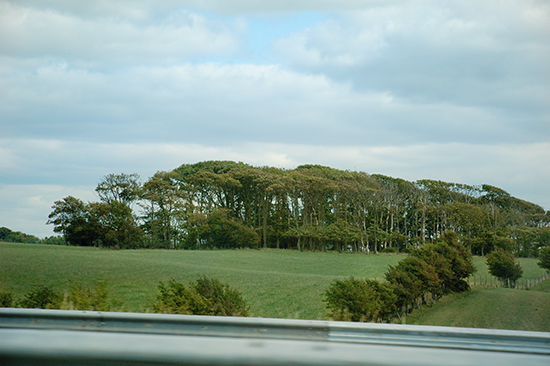
From the book: Scotland — “Caravan Northward.”
Read the Complete LyricClose the Complete Lyric — Northward
We were driving north through Scotland
When the Spirit came on me.
In a vision came a caravan,
Fleeing northward, seeking peace.
They were people from another age,
But their need was close and clear:
Somewhere they could live in safety,
Somewhere far beyond the fear.
Two brothers on the southbound road
Stopped to speak along the way.
Word had only lately reached them:
Mary Magdalene had passed away.
They were bound for southern France,
Where the mourners gathered near;
But the ones who journeyed northward
Had a reason for their fear.
All who were of Mary’s family
Were being hunted down.
They were fleeing toward a refuge,
Toward a life on safer ground.
Northward, northward,
Lord, let them find a place
Where a name is not a danger,
Where a family can be safe.
Let the road ahead have mercy
On the lives that travel there;
Let the living find a refuge,
Let the grieving know Your care.
The elder was Samuel.
The younger was Jacob.
It was made known to me
That they were captured and killed.
They had gone south to pay their respects.
I would carry their names with the story.
I had come to see a chapel,
With its story still unknown.
Now the road was filled with people,
And a sorrow not my own.
Northward, northward,
Lord, let them find a place
Where a name is not a danger,
Where a family can be safe.
Let the living find a refuge;
Let the grieving know Your care.
Samuel and Jacob—
Let their names be spoken here.
The vision closed.
The road went on.
Northward.
Their names stayed with me.
Scripture companions
Thematic connections elsewhere in the book
Isaiah 10:20-22 — A remnant and renewed dependence on the Lord.
Hebrews 12:1 — Remembering earlier lives within the book’s framework of witnesses.
TRACK 04
A Window Toward the Chapel
About this song
Arlin is shown a researcher’s quiet morning routine, his discovery of a gravestone, and his thanksgiving in the sunlight. In the account, Arlin shares the man’s thoughts and joy before learning his identity: Andrew Sinclair. Private prayer and patient attention become a desire to share what has been found.
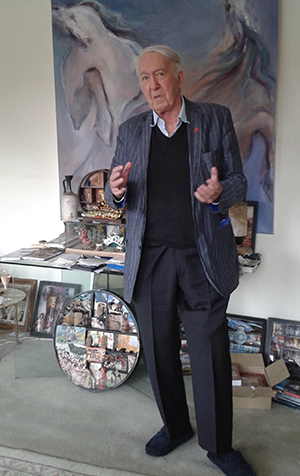
From the book: Scotland — “Andrew Sinclair.”
Read the Complete LyricClose the Complete Lyric — A Window Toward the Chapel
As we drove into the village,
I was shown a quiet room:
An older man preparing coffee,
With a day of work to do.
He looked out upon the roadway,
And he pondered, and he prayed.
I could hear the thoughts within him,
Though I did not know his name.
Before I ever knew his name,
I knew the prayer he prayed.
A window toward the chapel,
And the walk he took each day.
I saw more than a man at work—
His heart was opened too.
Before I ever knew his name,
I saw the world he knew.
In a dark and dusty corner,
I watched him bending low.
A sword and cup upon a gravestone,
A five-petalled rose.
The signs of knights, his family name—
A link he had not known;
The story he had doubted
Lay before him in the stone.
Then he stepped out to the south side,
With the sunlight on his face;
Raised his hands toward Heaven,
Filled with gratitude and praise.
The Spirit wrapped around him
As he lifted up his prayer.
I did not only see his joy—
His joy was mine to share.
“I’m going to write a book and make a film,
And share it with the world.”
I heard that purpose in his thoughts.
I did not yet know who he was.
Before I ever knew his name,
His joy became my own.
The man beside the window
Was no stranger to my soul.
I saw more than lifted hands—
I felt his thankful prayer.
Before I ever knew his name,
I shared his wonder there.
In time, I found The Sword and the Grail,
With that gravestone on the cover.
Andrew Sinclair.
I knew his joy before I knew his name.
Scripture companions
Thematic connections elsewhere in the book
Matthew 7:7-8 — Asking, seeking, and finding.
Habakkuk 2:2 — Recording what has been shown.
TRACK 05
What We Carry
About this song
A pattern in a picture opens into the “Castellum Rouge” research vision. Two young administrators must leave the place where they have served travelers. Their ledger, daily work, and final look back give the departure its human weight. The chorus reflects on the knowledge and willingness to serve that people can carry beyond a lost place.
From the book: Scotland — “Castellum Rouge.”
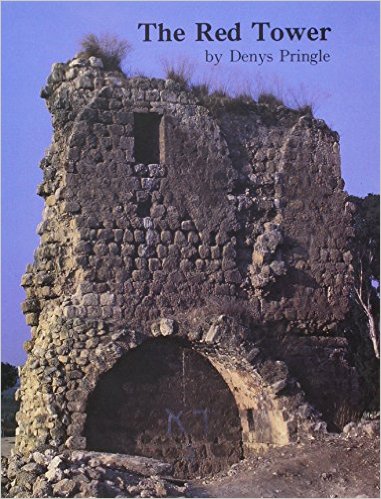
Read the Complete LyricClose the Complete Lyric — What We Carry
From a pattern in a picture
To the tiles upon a floor—
A vision opened on the lives
I’d never seen before.
In a castle built for pilgrims
On the road to Jordan’s shore,
Two young men had heard a message:
They could stay there no more.
They were young and they were kindred;
Both could read and both could write.
I could feel their disappointment—
They must leave that work behind.
A ledger in a wooden box,
With a lock to keep it closed;
A sloping top for writing on,
And the daily trade it showed.
Other things were on a wagon,
Made ready for the road;
But the place they’d served together
Was not something they could load.
What we carry, what we carry,
Isn’t only what we hold.
What we learned within these walls
Doesn’t end when we must go.
There is work beyond the leaving,
There are lives we have not known;
May the good we learn to offer
Find a place beyond these stones.
As they came out of the castle,
They looked down upon the way
Where they’d watched the passing travelers
In the course of every day.
One last look before departing
At the brown land stretched below;
They knew they’d never see it again,
Then they took the dusty road.
One was blond, and I was shown
That his line would lead to mine.
There was someone of my family
On that road through another time.
What we carry, what we carry,
Isn’t only what we hold.
What we learned within these walls
Doesn’t end when we must go.
Now I stand beyond their leaving,
With my own road still to go;
May the good we learn to offer
Find a place beyond these stones.
They could not take the castle.
They took the road.
Scripture companions
Thematic connections elsewhere in the book
Matthew 22:37-40 — Love of God and neighbor, carried into practical service.
TRACK 06
The Passing of Sacred Knowledge
About this song
At Rosslyn, Arlin sees the chapel still being built and an older man teaching a younger man on the scaffold. The account describes both knowledge and a spiritual mantle passing from William to his son. The song holds open the interval between receiving something and understanding it, before the later family connection gives the scene a more personal meaning.
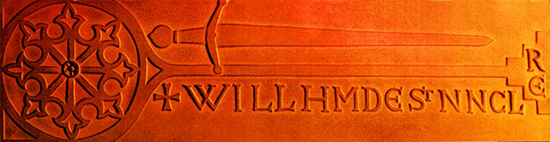
From the book: Scotland — “The Passing of Sacred Knowledge.”
Read the Complete LyricClose the Complete Lyric — The Passing of Sacred Knowledge
We were walking toward the chapel
When the centuries drew near;
I could see it still unfinished,
With the workmen’s scaffolds there.
High against the outer stonework,
A young man sat to learn;
An older man was teaching him—
How I longed to know his words.
I received before I understood,
And brought the questions home.
The passing of sacred knowledge
Was more than words alone.
I could not read its meaning yet,
But I would not let it go.
There was knowledge being given,
And a mantle passing on;
What had rested on the father
Now was resting on his son.
And as I watched him receiving,
It was reaching me as well—
Settling deep within my spirit,
More than I could grasp or tell.
Later I would learn their names:
William, father; William, son.
One had set the chapel rising,
One received what he’d begun.
From that younger man, my family
Would come down through years to me;
What I’d watched upon the scaffold
Was a part of my own history.
I wanted all the meaning
In the moment it was shown.
But some things ask for years of living
Before they can be known.
I received before I understood;
Now the years have let me see:
The passing of sacred knowledge
Was more than history.
A father and a son at work—
And their story reaching me.
The chapel rose around them.
The meaning grew in me.
Scripture companions
Thematic connections elsewhere in the book
2 Kings 2:8-15 — Elijah, Elisha, and the mantle: a companion to spiritual inheritance.
Hebrews 12:1 — Earlier generations and witnesses.
TRACK 07
The Workshop Below
About this song
Beneath Rosslyn, prayer becomes plans, craftsmanship, and care for the people doing the work. This song follows Arlin’s portrait of Earl William seeking to put love of God and neighbor into useful practice through Freemasonry in its original form before becoming hi-jacked.
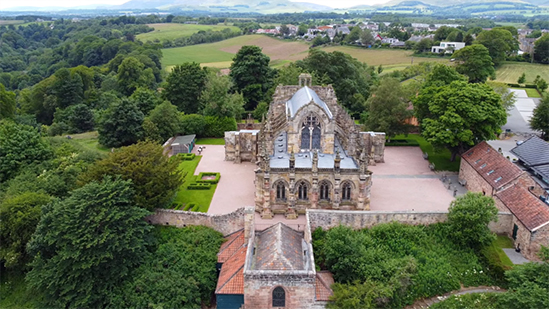
From the book: Scotland — “Modern-Day Moses,” “His Office,” and “Earl William’s Motivation.”
Read the Complete LyricClose the Complete Lyric — The Workshop Below
Down the steps beneath the chapel,
To the place where William worked;
There he prayed and paced and pondered,
Giving shape to what he’d learned.
Where the window stands, an opening
Once had let him step outside;
He would turn his thoughts toward Heaven,
Then return to his designs.
Let the prayer become the practice,
Let the work reveal the love.
Let the faith that looks to Heaven
Care for those in front of us.
Love of God and love of neighbor—
More than words for us to know;
That was what he labored over
In the workshop down below.
Plans were drawn upon the timber,
Carved as patterns for the stone;
And the men who came to build it
Were not left without a home.
He gave houses to the workmen,
And he gave them land as well;
There were lives around the building,
Not just beauty in itself.
Moses knew the work of freedom
Did not end when chains were gone.
William bore a kindred burden:
How would people carry on?
He would shape a new fraternity,
Freemasonry by name,
Seeking ways to live the Gospel,
Not just words that spoke of change.
And he spoke of days of glory,
When the people would come through,
And this room might hold the waters
Where their lives could start anew.
Let the prayer become the practice,
Let the work reveal the love.
Let the faith that looks to Heaven
Care for those in front of us.
Love of God and love of neighbor—
More than words for us to know;
That was what he labored over
In the workshop down below.
He prayed. He planned.
He put his love to work.
Scripture companions
Cited in this song’s source passage
Matthew 22:37-40 — The two great commandments at the center of the refrain.
Romans 6:4; 2 Corinthians 5:17 — Baptism and new life.
Acts 3:19-20 — The book’s “Times of Refreshing” discussion; the passage does not name William or Rosslyn.
TRACK 08
Living Stones
About this song
This looks back to Arlin’s religious education before the Scottish journey. The Geneva passages contrast impressive buildings with living people and include Calvin’s repentance. The teachings of Reverends Barclay and Campbell help Arlin move beyond the “one true church” framework.
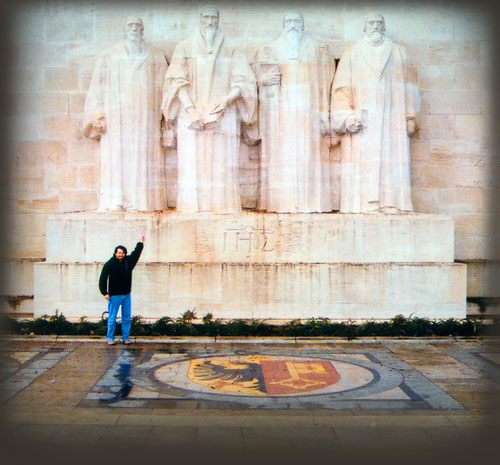
From the book: Scotland — “John Calvin,” “Geneva,” “Ecumenics,” “William Barclay,” and “Thomas Campbell.”
Read the Complete LyricClose the Complete Lyric — Living Stones
I had left the church that raised me,
But its questions traveled too:
Who could speak for God with power?
Which authority was true?
Through the pages I was reading,
Other voices reached my soul;
Then I came to old Geneva,
With so much I did not know.
At St. Pierre, the pews were crowded,
And the preacher’s voice was strong.
I expected Calvin’s pleasure
In the place he’d served so long.
But the grandeur brought him sorrow;
He could see what I could not:
Living stones were more to Heaven
Than the finest stones we’d cut.
Living stones, living stones,
Not a kingdom of our own;
Let the house we build for Jesus
Be the love that we have shown.
Let the faith we speak on Sundays
Find the ones who weep alone;
Let us be a house of mercy,
Let Him build with living stones.
By the river, Calvin showed me
Where he’d wept beneath his shame;
He had answered for Servetus,
For a life destroyed by flame.
I could feel the Spirit’s absence;
I could hear his broken plea.
In time, forgiveness found him—
And his sorrow humbled me.
Lord, let learning make me humble;
Let conviction still be kind.
Never let me love an argument
More than someone’s precious life.
Barclay led me to a book
On the questions I had brought;
Campbell’s call to live as one
Helped undo what I’d been taught.
Different teachers, each imperfect,
None the owner of the way;
They could lead me toward the Savior
Without standing in His place.
Living stones, living stones,
Not a kingdom of our own;
Let the house we build for Jesus
Be the love that we have shown.
Let the faith we speak on Sundays
Find the ones who weep alone;
Let us be a house of mercy,
Let Him build with living stones.
Not a kingdom of our own.
Make us living stones.
Scripture companions
Cited in this song’s source passage
1 Peter 2:5 — Living stones: the central image of the song.
Thematic connections elsewhere in the book
Matthew 22:37-40 — Practical love of God and neighbor.
TRACK 09
Across the Firth
About this song
The younger William and his family cross toward safety in the vision, while Arlin and Tammy see the water and land beyond from above Edinburgh. The relief is real, but it’s not the end of every danger. Later recognition of the landscape and the family connection changes what that distant shore means in the final chorus.
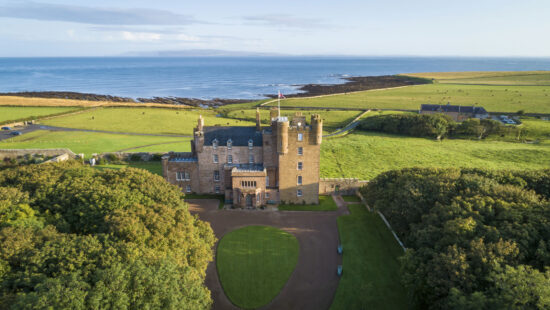
From the book: Scotland — “To FIFE then Kirkwall” and its “Summary.”
Read the Complete LyricClose the Complete Lyric — Across the Firth
Another vision opened
When our chapel walk was done;
I saw a fleeing family
With the builder’s younger son.
I told Tammy we must follow;
There was more for us to see.
As we drove toward the north,
Their journey lay ahead of me.
I saw them reach the water,
Then I saw them cross to land.
Something eased upon the far side—
There was room to breathe again.
I could feel their small relief
As the distance came between
Those who meant to do them harm
And the lives they hoped to lead.
Across the Firth, across the water,
There was room to breathe again.
What to me was distant country
Was a refuge then for them.
Not the end of every sorrow,
Not the last road they would roam—
But a little space for living,
And a chance to make a home.
From a height above Edinburgh,
We could see the land beyond.
In the vision, sometime later,
They would travel farther on.
As the sun went down before us,
The vision closed once more.
I would learn that shore was Fife,
And the water, Firth of Forth;
I would trace my family’s story
To that son who journeyed north.
Across the Firth, across the water,
There was room to breathe again.
What had seemed like distant country
Was a refuge for my own.
Not the end of every sorrow,
Not the last road they would roam—
But a little space for living,
And a chance to make a home.
Fife across the water.
My family on the road.
Scripture companions
Thematic connections elsewhere in the book
Isaiah 10:20-22 — A remnant and reliance on the Lord.
Hebrews 12:1 — The relationship between earlier generations and the present.
TRACK 10
Look Closer
About this song
Brings the mystery of the Kirkwall Scroll into a contemporary soundscape. It begins with a simple question: What if the past is not silent, but waiting inside lines, colors and symbols for someone to look again? Following a trail from Andrew’s writing to the painted cloth in Kirkwall’s lodge, the song moves through Creation, New Jerusalem, the cross, Exodus, the tabernacle, the Temple and the tools of builders. Yet its deepest question is not merely what William intended—it is what we will do with a teaching that has survived.

From the book: Scotland — “The Secret Scroll” and “Panels of Instruction.”
Read the Complete LyricClose the Complete Lyric — Look Closer
Andrew’s pages pulled me northward
To a lodge in Kirkwall town,
Where a scroll of painted symbols
Held a world I hadn’t found.
Every panel raised a question,
Every image left a clue:
Was William speaking to his own time,
Or was he speaking to us too?
I leaned in,
And the distance disappeared;
Something drawn so long ago
Was still waiting for me here.
Look closer—
Let the pictures come alive;
Every image holds a message
Someone carried through the years.
Hand to hand and heart to heart,
That’s the way a truth survives;
If it leads us into kindness,
Then the message is alive.
Still alive.
Still alive.
First, the seven days of making,
Then the city John was shown:
Twelve foundations underneath it,
Rainbow burning round the throne.
And the cross of Jesus held me
Like a signal through the years;
The longer I stayed with the picture,
The more another world appeared.
I leaned in,
And the distance disappeared;
What was drawn so long ago
Was still speaking to me here.
Look closer—
Let the pictures come alive;
Every image holds a message
Someone carried through the years.
Hand to hand and heart to heart,
That’s the way a truth survives;
If it leads us into kindness,
Then the message is alive.
Then the road that led from Egypt,
Stone-cut tablets, sacred plans;
Tents around the tabernacle,
Like a home upon the sand.
Temple, ark and rising pillars,
Glory burning in the air;
Then the working tools of builders,
Saying, “Build the world with care.”
Maybe William found a source book;
Maybe fragments traveled far.
Maybe every generation
Left a fingerprint, a mark.
I don’t have to solve the whole thing
To know something made it through.
Someone trusted us to find it—
What will we pass on from here?
Look closer—
Let the pictures come alive;
Every image holds a message
Still arriving through the years.
Hand to hand and heart to heart,
That’s the way a truth survives;
If it leads us into kindness,
Then the message is alive.
Still alive.
Still alive.
What was handed down
Is still alive.
Paint on cloth,
Light through time;
What was handed down
Is ours to carry now.
Scripture companions
Thematic connections elsewhere in the book
Matthew 22:37-40 — Love of God and neighbor as the ethical companion to learning.
Revelation 3:12 — New Jerusalem: a companion to the city imagery.
TRACK 11
Light in the North – St. Magnus
About this song
During later research, Arlin reports seeing the elder William praying at St. Magnus Cathedral. The builder’s titles and accomplishments give way to a father’s concern for the generations before and after him. The verses remain with the narration; the choruses give poetic voice to William’s plea, and the spoken prayer retains the words as quoted in the book.
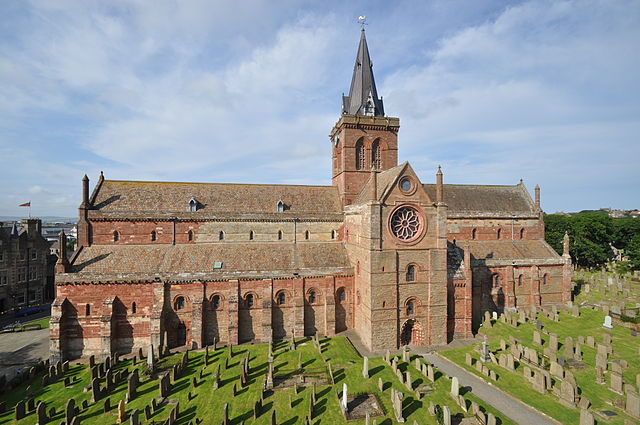
From the book: Scotland — “St. Magnus Cathedral.”
Read the Complete LyricClose the Complete Lyric — Light in the North – St. Magnus
While I studied St. Magnus,
A vision let me see
The man who built at Rosslyn
In his hour of deepest need.
Low light in the cathedral,
His face hid in his hands;
He feared the king’s next action,
And a son defied his plans.
He could not hold the future
As firmly as a stone;
He bore the weight of all his line,
Yet felt himself alone.
Holy Father, keep them
When my work on earth is done;
Keep the ones who come hereafter
In the mercy of Your Son.
Many came before me;
Let there still be those to come.
Holy Father, keep my family
After I am gone.
I could feel the fear within him,
Though his day was far from mine;
He was praying for the living
And the ones beyond his time.
Holy Father, I implore thee in the name of thy Son
that my family line be preserved,
for many have come before me,
and I desire that many will remain after I am gone.
Did he know that I would hear him,
Far beyond the years he knew?
That a child of those he prayed for
Would be grieving with him too?
Holy Father, keep them
When my work on earth is done;
Keep the ones who come hereafter
In the mercy of Your Son.
Many came before me;
Let there still be those to come.
Holy Father, keep my family
After I am gone.
Light in the north.
I heard a father’s prayer.
Scripture companions
Thematic connections elsewhere in the book
Hebrews 12:1 — Witness across generations.
Matthew 7:7-8 — Prayer and asking.
Isaiah 66:13 — God’s comfort for Jerusalem; a thematic echo of consolation.
TRACK 12
The House Beside the River
About this song
Sarah is introduced as Mary Magdalene’s daughter and one of the northbound travelers in the book’s account. Her hostel for the elderly and sick, her journeys to seek support, and the care Jesus has shown her form the center of this song. Voiced as Sarah’s own story, the lyric turns the refuge she sought into a welcome she offers to others.
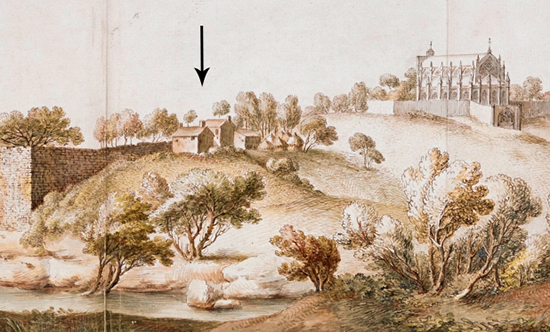
From the book: Scotland — “Roslin Castle” and “Saint Sarah.”
Read the Complete LyricClose the Complete Lyric — The House Beside the River
My name is Sarah.
Mary Magdalene was my mother.
I came north with the others.
Here beside the running water,
I made room for those in need:
For the old whose strength was failing,
For the sick who needed peace.
To the river and returning,
Then to those who waited near;
I had come here seeking refuge—
Now let others find it here.
In the house beside the river,
You are not a burden here.
You are someone to be cherished
Through the pain and passing years.
Let the love that once received me
Be the love I offer here.
I was still a child when Jesus
First became so dear to me;
In the years that lay before me,
He would watch so faithfully.
Now the years are on my shoulders,
And my work is close at hand:
Love is something I can offer
Even here, in this far land.
Twice I went to ask for help
For the people in our care;
All the needs I could not meet
Were the reason I went there.
In the house beside the river,
You are not a burden here.
You are someone to be cherished
Through the pain and passing years.
Let the love that once received me
Be the love I offer here.
To the river and returning.
There is someone waiting here.
Scripture companions
Thematic connections elsewhere in the book
Matthew 22:37-40 — Love of God and neighbor in a life of care.
1 Peter 2:5 — Living stones: people rather than buildings.
Additional thematic companions
Matthew 25:35-40 — Hospitality and care for those in need.
TRACK 13
Brother of the Master
About this song
“Brother of the Master” begins with a question about Sarah—and an answer already waiting in an earlier testimony. When Arlin asks Jesus for supporting evidence concerning Sarah, he is directed back to an encounter with James dated May 26, 2003. At the time, he had wondered whether telling James’s story was the only reason for that visit. Years later, while writing about Sarah for the Scotland book, he finds that the earlier account takes on a significance he had not yet understood.
The song then gives James room to speak as he is portrayed in that testimony: a younger brother who loved Jesus, witnessed His ministry, and wanted people to remember that he was there. At the Samaritan well, the love he had known so personally opens before him as a love offered to everyone. His memories move through sorrow at the crucifixion, the retelling of Jesus’ miracles, and the refusal of a kingly robe—for he was the brother of the King, not the King himself. Beneath every recollection is the same enduring affection: “I loved my brother, and I still love him.”
The closing narration returns to Sarah and explains the connection described in the book: she married James’s son, who was also named James. The daughter of Mary Magdalene thus married the grandson of Mary, the mother of Jesus. In this account, the family line continues through Jesus’ brother, not through children of Jesus Himself. James’s testimony becomes the bridge between learning about Sarah’s life of service and accompanying her into the story of her departure.
From the book: Scotland — “Brother of the Master.”
Read the Complete LyricClose the Complete Lyric — Brother of the Master
I asked Jesus for another witness concerning Sarah.
He asked me,
“Do you remember back in 2003
when my brother James visited you
and asked you to write about him?”
I went back to what I had written.
There was a question I had asked then:
Was telling his story
The only reason James had come?
I had not yet understood
How his story would meet hers.
I was younger; He was my brother,
And I followed where He went.
I had known His love so closely—
He was brother, guide, and friend.
I would watch the way He moved,
How He answered every need;
And I wanted to be like Him
In His kindness and His peace.
Brother of the Master,
Brother of the King,
I was there to hear His teaching,
I was there to see these things.
Let my place be remembered,
But the glory rest with Him.
I loved my brother Jesus,
And I still love Him.
I was there when others doubted,
When they saw no special sign;
But I knew the heart within Him,
And I stayed there by His side.
At the well in Samaria,
Something opened up in me:
Love I thought was ours to treasure
Reached beyond our family.
When He spoke with that woman,
I began at last to see:
What He had been to me in private
He had come to be for all.
Brother of the Master,
Brother of the King,
I was there to hear His teaching,
I was there to see these things.
Let my place be remembered,
But the glory rest with Him.
I loved my brother Jesus,
And I still love Him.
I was there when they killed my brother;
I would not turn from that place.
I was there while others trembled,
While my mother saw His pain.
I asked Joseph for the tomb;
I told the others what was done.
Out of fear they would not come near,
But I stayed there for my brother.
I was there when water blushed to wine,
When blind eyes were opened wide,
When bread was broken for the thousands,
When the dead were called to rise.
I told the stories, kept them living,
Spoke of wonders I had seen;
I would spend my days portraying
Who my brother truly was.
They would have placed a kingly robe on me,
But I would not take that throne.
I was brother of the King—
The crown was His alone.
I would never turn their honor
Into something that misled.
I would speak of Him as Master,
And remember what He said.
Brother of the Master,
Brother of the King,
I was there to hear His teaching,
I was there to see these things.
Let my place be remembered,
But the glory rest with Him.
I loved my brother Jesus,
And I still love Him.
Then Jesus showed me why
I had been sent back to James.
Sarah had married the son of His brother James—
A son who also bore his father’s name.
The daughter of Mary Magdalene
Had married the grandson of Mary,
the mother of Jesus.
The family line continued through His brother,
Not through children of Jesus Himself.
Then I understood
Why James had come.
A brother’s witness,
A family line,
A love remembered
Across the years.
And now I turn again
To Sarah.
Scripture companions
Thematic connections elsewhere in the book
Matthew 13:54–58 — Jesus among the people of His hometown, who name His mother Mary and His brothers, including James.
Additional thematic companions
Hebrews 5:8 — The Son’s experience of learning obedience through suffering.
Galatians 1:19 — Paul identifies James as “the Lord’s brother.”
1 Corinthians 15:7 — James is specifically named among those who saw the risen Christ.
John 4:7–26 — Jesus’ conversation with the Samaritan woman and His offer of living water—the Gospel encounter recalled in the song’s movement from private affection toward love for others.
TRACK 14
Those I Leave Behind
About this song
In the book’s account, Jesus is the first person Sarah sees after her death. She comes to understand what has happened and recognizes her release from pain and age, but her concern remains with family, friends, and those she cared for. This first-person lyric stays with her questions and His reassurance, ending with her agreement to go with Him and see her current family members and their futures.
From the book: Scotland — “Saint Sarah”: recognition of death, concern, and reassurance.
Read the Complete LyricClose the Complete Lyric — Those I Leave Behind
The first face I saw was Jesus;
He had come across the hill.
I could see the place around me,
Yet my body lay there still.
He was patient with my questions
As I came to understand:
My earthly life had ended,
Yet I was here with Him.
My first thought was for my family,
For the lives that needed care;
I could not turn straight to Heaven
Without asking how they’d fare.
Then I knew the pain had left me,
And my thoughts were clear again;
I was free of age and weakness—
But my love remained with them.
Those I leave behind—
I am thinking of them still.
Who will sit beside the lonely?
Who will care for those still ill?
Jesus, I can leave the pain,
But how do I leave them?
He assured me they would be well;
He had heard what troubled me.
Then He asked about my family:
Would I like to go and see?
Those I leave behind—
He had heard my every care.
I had come to Him with questions,
And He met me gently there.
I would go with Him and see
The lives still dear to me.
And I said yes.
Scripture companions
Thematic connections elsewhere in the book
Hebrews 12:23 — The spirits of just men made perfect, within the book’s introductory framework.
Additional thematic companions
1 Peter 5:7 — Entrusting care to God.
John 14:1-3 — Reassurance and being with Christ.
TRACK 15
The Hill and the Promise
About this song
On the hill that will later hold Rosslyn Chapel, Sarah sees her family and future generations. The promise in the account is that her family will continue, and some of its descendants will do great things—not that their lives will be free of trials. The future builder, ascent, and quiet burial complete her sequence. The lyric echoes William’s earlier petition, now as reassurance, and retains the promise quoted in the book.
From the book: Scotland — “Saint Sarah”: the hill, promise, ascent, and burial; “Modern-Day Moses.”
Read the Complete LyricClose the Complete Lyric — The Hill and the Promise
He took me up the nearest hill,
Above the home I’d known;
There He showed me all my family,
How their lives were going on.
Then He showed me generations
And the trials that they would face;
I could only ask for mercy—
For His kindness and His grace.
You have heard me, Father,
Though my work on earth is done;
There will still be those who follow,
There will still be good to come.
Not a life untroubled,
Not a road without its rain—
But a family still living
After I am gone.
He showed a future builder,
A descendant yet to come;
Here, a chapel would be rising,
Here, a new work would be done.
Like a Moses for his people,
He would help to make them free;
I had asked about my family—
He had shown what they could be.
He told me:
“I will leave a spiritual witness of this meeting,
my promises to you and your family,
for all future generations to know, have, and experience.”
He told me many waited,
And the Father wished me near;
Then He joined the hill with Heaven,
And we rose together there.
You have heard me, Father,
Though my work on earth is done;
There will still be those who follow,
There will still be good to come.
Not a life untroubled,
Not a road without its rain—
But a family still living
After I am gone.
They laid my body beneath a tree,
In quiet, hidden there.
Before a chapel ever stood,
He had heard a mother’s prayer.
Scripture companions
Thematic connections elsewhere in the book
Hebrews 12:1; Hebrews 12:23 — Witnesses and continuing spiritual life.
Matthew 22:37-40 — The future builder’s work understood through service.
Additional thematic companions
John 14:1-3 — Welcome and being with Christ.
TRACK 16
A Remnant Across the Sea
About this song
The story reaches America; this follows the chapter’s connection between Scotland, remnant preservation, and the responsibilities of freedom. President Arthur St. Clair provides a brief human scene, while Isaiah’s imagery turns the song toward helping others. A need for refuge becomes a responsibility to extend refuge and mercy.
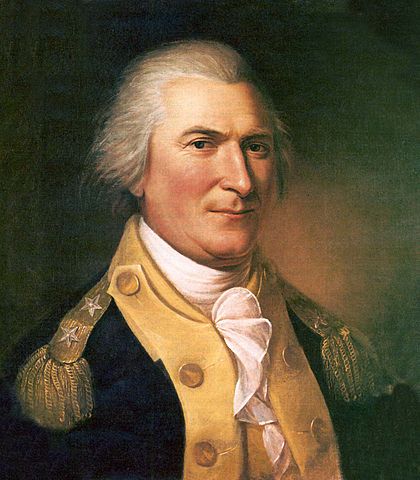
From the book: America — “Exoduses,” the Scotland discussion, and “Arthur St. Clair.”
Read the Complete LyricClose the Complete Lyric — A Remnant Across the Sea
The road that led the hunted north
Did not end beside the sea.
Other generations followed,
Seeking room for liberty.
Those who fled the old oppression
Took their faith to other shores;
In America’s beginnings,
I could hear the Scots once more.
A remnant across the sea,
With a faith they would not yield;
Seeking room to follow Jesus,
Not a life of faith concealed.
May the land that gave them shelter
Give the weary shelter too;
Let the freedom they had prayed for
Live in what their children do.
Arthur St. Clair gave his counsel
With a country’s fate at stake,
Pointing Washington toward Princeton,
Toward a chance they still could take.
Later, serving in the Congress,
He faced work of another kind:
How to turn the hopes of freedom
Into laws that would endure.
I read of nations bringing
Israel’s children home again.
May our strength be used for mercy,
May we learn to lend a hand.
America, the land I call my own,
Be a blessing, not a throne;
Let your strength be used for others,
Not be kept for us alone.
A remnant across the sea,
With a faith they would not yield;
Seeking room to follow Jesus,
Not a life of faith concealed.
May the land that gave them shelter
Give the weary shelter too;
Let the freedom they had prayed for
Live in what their children do.
Scotland, across the water—
What we carry must be lived.
Scripture companions
Cited in this song’s source passage
Isaiah 1:9; Isaiah 10:20-22 — Remnants, departure, and renewed dependence on God.
Isaiah 49:22 — Nations carrying Israel’s sons and daughters.
Isaiah 60:3-5; Isaiah 66:10-13 — Assistance and consolation. The chapter’s application to America is the author’s interpretation.
TRACK 17
Learn About the Family Here
About this song
The journey comes even closer to home: San Antonio, a day set aside for learning about family, the cemetery visit, and the Speer and Campbell connections that lead back to Fife. The spoken instruction and the question come from the book. What seemed another leaving becomes a different homecoming.
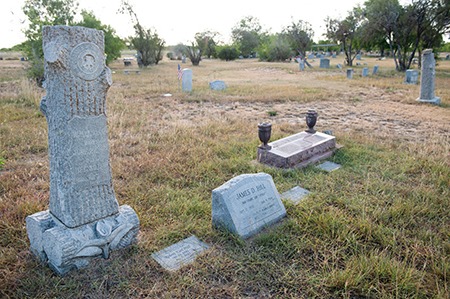
From the book: America — “Texas” and “Family Ties.”
Read the Complete LyricClose the Complete Lyric — Learn About the Family Here
We had come to be with family,
California left behind;
Yet in San Antonio,
Home was something hard to find.
He said:
“We’re not going to go anywhere today.
Take the day off and learn about your family here.”
And I asked, “I have family here?”
In a window opened to me,
I saw lives beyond my own;
Some were living, some had gone—
And I knew I wasn’t alone.
Then I searched my grandmother’s story,
Following her family line;
Names I never thought to look for
Had been here for all this time.
Learn about the family here;
There were lives I’d yet to know.
I had come to join my family,
Found how deep its roots could go.
What had seemed another leaving
Was a different coming home.
My son had made his home nearby,
Not knowing what we’d find:
Three generations in a town
Just half an hour away.
On Father’s Day, we stood together
By the graves that bore their names;
In a place that felt so foreign,
There was family all the same.
In the Speer line, there were preachers
Who had learned from Campbell too;
Through the names and generations,
Scotland came again in view.
There was Fife across the water—
And its story brought me home.
Learn about the family here;
There were lives I’d yet to know.
I had come to join my family,
Found how deep its roots could go.
What had seemed another leaving
Was a different coming home.
I had asked, “I have family here?”
I was not alone.
Scripture companions
Thematic connections elsewhere in the book
Matthew 7:7-8 — Asking and seeking.
Hebrews 12:1 — Earlier lives and the present, within the book’s framework of witnesses.
TRACK 18
Truth Conquers All
About this song
The finale joins the inscription highlighted in “America” with the conclusion’s call to approach God directly, serve people, and stand together against oppression. The opening retains the book’s English rendering of the inscription. The Scotland refrain returns from the Prelude, changing its request into a commitment: the life that follows must express what the journey has taught.

From the book: America — the “Truth Conquers All” inscription; Summary and Conclusion; the Scotland Prelude.
Read the Complete LyricClose the Complete Lyric — Truth Conquers All
Wine is strong.
The king is stronger.
Women are stronger still.
But truth conquers all.
All the questions I had carried
Through the books and through the years
Brought me back to human faces,
To their labors and their tears:
Sarah’s hands beside the river,
William bending low in prayer—
What would I do with that knowledge
For the people in my care?
Truth conquers all—
Let it have its way in me.
Let me come to God through Jesus;
Let my neighbor’s heart be free.
Let the faith I call my own
Have a kindness others know.
Truth conquers all—
Let the life I live say so.
When a cause that promised freedom
Starts to rule the ones it served,
When the truth must bow to power
And the timid lose their words,
Let us stand beside each other,
Share the shelter, share the load;
What we learned from those before us
Must be lived along this road.
What we carry is not finished
When the final page is turned.
There are people still before us—
Let us live what we have learned.
Truth conquers all—
Let it have its way in me.
Let me come to God through Jesus;
Let my neighbor’s heart be free.
Let the faith I call my own
Have a kindness others know.
Truth conquers all—
Let the life I live say so.
Scotland, Scotland,
More than stone and sea;
I came to see a chapel,
And found my history.
Now the love that crossed the ages
Is the love we choose to give—
Not a past we only honor,
But a truth we dare to live.
Beyond the chapel wall—
Truth conquers all.
Scripture companions
Thematic connections elsewhere in the book
Matthew 22:37-40 — Love of God and neighbor.
1 Peter 2:5 — Living stones and a faith expressed through people.
Matthew 7:7-8 — Direct asking and seeking.
TRACK 19
Where He Came Ashore
About this song
An unfamiliar message—“PX9X”—sets a search in motion. Drawn from Arlin’s account of an October 20, 2022 encounter with Leif Eriksson, this song follows the discovery from four unexpected characters to a shoreline in Maine. Bailey Island, its anchoring waters, and its beach become connected with the landing described in his testimony. The date of the encounter takes on added significance when he understands it as the anniversary of Eriksson’s arrival.
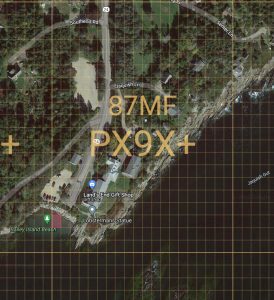
From the book: TESTIMONY: Scotland — Appendix: “Leif Eriksson,” including the “Maine Penny” discussion.
Read the Complete LyricClose the Complete Lyric — Where He Came Ashore
On a morning in October,
On the twentieth, he came—
A cousin from another age,
Leif Eriksson by name.
Sent by God, he brought a message
Of the place he’d come ashore;
Then he gave me four strange symbols
I had never used before.
P. X. 9. X.
I began to search the symbols,
Learned a way to name a place;
Not a house along a roadway,
But a grid that I could trace.
At the tip of Bailey Island,
On a map of coastal Maine,
Land and water came together—
And the message grew more plain.
Where he came ashore,
Where the land and waters meet;
A place to lower anchor,
A beach to reach by oar.
From a name across the centuries
To a place I could explore—
Three letters and a number
For the place he came ashore.
Jaquish Gut, the deeper water,
Where a vessel could be moored;
At the beach, a smaller rowboat
Could bring people to the shore.
Then the date took on new meaning,
Joining now with long before:
The twentieth of October—
The day they’d come ashore.
Then I learned about the Maine penny,
An old Norwegian silver coin;
Eighty miles from Bailey Island,
At the place called Naskeag Point.
I took it as a second witness,
While I weighed the years again:
If Leif himself had traded it,
Then the dates would have to change.
Where he came ashore,
Where the land and waters meet;
A place to lower anchor,
A beach to reach by oar.
From a name across the centuries
To a place I could explore—
Three letters and a number
For the place he came ashore.
P. X. 9. X.
Bailey Island, Maine.
October twentieth.
Now the story had a shore.
Scripture companions
Thematic connections elsewhere in the book
Numbers 12:6 — God communicating through visions and dreams.
Habakkuk 2:2 — Recording a vision and making it plain.
Matthew 7:7–8 — Asking, seeking, and finding.